


 The Sheriff Joe Baron Foundation


Holidays bring more efforts by scammers to target veterans and servicemembers
Holidays - particularly those that honor veterans or other servicemembers, but really all holidays, have become prime opportunities for scammers to try and trick this particular group of people into revealing personal information that can give the scammer access to bank accounts and other financial assets.
Knowing how large our military community is here in Norfolk (and surrounding communities), the Consumer Protection Unit (CPU) at the Norfolk Sheriff's Office wants to share this warning from the Federal Trade Commission (FTC) with residents about this problem:
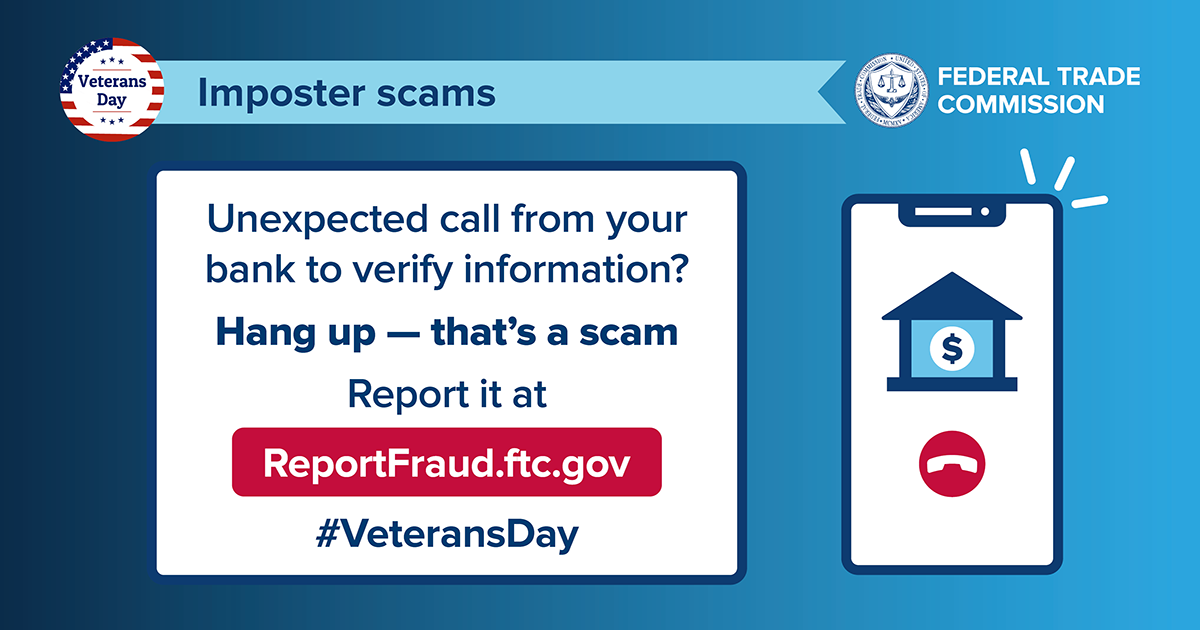 Imposters are contacting veterans, servicemembers, and their families. They pretend to be representatives of USAA Bank, Navy Federal Credit Union, and other banks. They’re asking for information — like your Social Security, bank account, or credit or debit card number, or your password. They’re saying that your debit card has been blocked, they’ve detected fraudulent activity, or some other urgent excuse. (These, by the way, are all lies.)
You may get one of these unexpected calls or voicemails from your bank, or even a surprise text or email with a link that includes an official-looking logo (also all fake). These are from scammers who want your information to get into your accounts or steal your identity. And if you click on the fake link, they could install malware on your phone or computer, which could give them complete access to your device and information.
Here’s how to protect yourself:
-
- Don’t trust caller ID. Scammers fake the number they call from. Never call back phone numbers from your caller ID or those left in voicemails.
- Never give personal information to anyone who contacts you out of the blue. Financial institutions won’t ask you for personal information or passcodes. If you think it could be legit, contact the company using a website or phone number you know is real.
- Don’t click links in unexpected texts or emails. Those are often phishing scams. If you’ve clicked a link by mistake, update your phone’s and computer’s security software.
Suspect a scam? Report it at ReportFraud.ftc.gov and visit MilitaryConsumer.gov for more resources. Also, read more about the FTC’s rulemaking proposal to combat impersonation scams.
If you've been subjected to a scam attempt like this, please contact the Norfolk Sheriff's Office's Consumer Protection Unit to file a report.
 As the temperature goes down, it's become normal for scammers to try and exploit fear of being unable to heat their home to trick people into sending them money that the person being scammed doesn't actually owe.
 I met with a father and daughter. The father is an elderly retired naval officer who was the subject of a phishing e-mail scam wherein the scammer persuaded the victim to fill out a form and ultimately initiate a wire transfer from his bank.